
Monday, November 11, 2013
Mo' Dancin': Au Go Go
For you oldsters, see if you can spot Joey Heatherton, Teri Garr, and Toni Basil. Reportedly they're in there somewhere.
Thanks to Art Chantry for the alert.

Slammin' Dancin'
This has been around the world a few times but it's still worth seeing. There's a certain element of violence here that makes it almost uncomfortably intense. And brilliant.
Compare it to this rather polite description of Jitterbugging.
Wednesday, November 6, 2013
Whitey Powers
We spend much of our time on Jelly Roll touting music of a certain vintage. But we also listen to more contemporary music on occasion. (I'm a father of a teenager, I'm subject to hearing all kinds of, er, product. Especially on long car rides.) And once in a while we come across something we like:
His name is Nathan Joseph White, his nom de musique is Whitey. His recent demurral written to a large production company wanting free use of his music free went viral. (His music has been featured in films and television shows like Breaking Bad and Grand Theft Auto IV.) He tried going the traditional music industry route with the release of his album but in his disgust decided to go his own way with Bandcamp. We like what we're hearing (admittedly, it does have a kind of retro appeal). Maybe you will too. The album for your delectation is linked below. Buy it from Bandcamp here.
His name is Nathan Joseph White, his nom de musique is Whitey. His recent demurral written to a large production company wanting free use of his music free went viral. (His music has been featured in films and television shows like Breaking Bad and Grand Theft Auto IV.) He tried going the traditional music industry route with the release of his album but in his disgust decided to go his own way with Bandcamp. We like what we're hearing (admittedly, it does have a kind of retro appeal). Maybe you will too. The album for your delectation is linked below. Buy it from Bandcamp here.
Monday, November 4, 2013
Pushing
Tom Thum: The Michael Jackson is corny but the didgeridoo is brilliant.
Reggie Watts is a genius and proves that music is much more and much less than you think:
"Three Beats for Beatbox Flute" by Greg Pattillo: Going new places.
Guy turns kitchen into giant synthesizer:
That fusty old tool of lederhosen-wearing oompah bands, ultra-square band leaders, and other musical misfits, just got totally sexed up.
Meet Greek babe Zoe Tiganouria. Before Zoe, you may not have noticed the accordion required so much spreading of the legs to play – a point made very clear here. While she may be pushing perceptions of the accordion, her boundaries aren't musical: where that's concerned you'll find she's firmly in the middle-of-the-road. That aside, she's a lot more than a spike-heeled and pouty-lipped tart – she's got chops. If her larded résumé is any indication, she's played with a who's who of Greek musical elite and has even clocked some time with James Brown (!). She may be the instruments first superstar, at least for the Cyrillic parts of the world.
A little off theme but I just love this piece: Horowitz and Sriabin proving that the piano my be the best drum ever created: the beatbox abstracted.
Saturday, October 26, 2013
Benjamin Franklin, the Robert Moog of His Day
Ever run your wetted finger on the rim of a wine glass? It produces a sound. Cover a table with wine glasses tuned to various pitches and it's called a glass harp. Benjamin Franklin heard someone play a glass harp and, because he was Benjamin Franklin, invented the Armonica, a kind of 18th century Theremin or Georgian era synth. An explanation of the curiosity below:
Sounds like a pipe organ with a single high stop pulled. No matter what's played on it sounds like a funeral. In any event, it's curious.
Monday, October 21, 2013
Momma, can you hear me yell, Your baby boy's gone back to hell: Jacques Brel in Spirit and Word
I've made my case for Jacques Brel before (here and here). Brel ( 1929-1978) was the Belgian singer/songwriter capable of wringing more expression from his teeth than a legion of vocal contestants from The Voice/American Idol/etc. His performances were a masterful balance of black comedy and heart shattered pathos delivered like a meth-crashing Pagliacci. And if the vocal and facial intensity weren't enough, watch him sweat buckets enough for a menopausal squad of Tina Turners. Intensity was his meat.
But what of the songs? Even in their English "translations" his lyrics are the opposite of cloying and sentimental. He seemed incapable of seeing love as anything other than humiliating, doomed, or worse, cancerous; or, as in Mathilde, all three together. (Not ironically it was lung cancer that took Brel's life at 49.) Purists have argued that the only way to understand the true depths of Brel is to hear him in his original French. No doubt this might be the preferred vehicle for the French enabled but that's not to say that some of the third-party English reworkings don't have a power of their own. (The title of this post is a line from one such translation.) As representatives of the translations, both Dusty Springfield and Shirley Bassey make cases of their own, understatement in the former and eye-shifting displays of power in the latter.
See Brel in action with a series posted at Network Awesome.
Below, Scott Walker—who famously recorded a hefty number of Brel translations—takes a crack at a reworking of Mathilde.
It's been argued that Michigander creative writing professor Dr Arnold Johnston may be the best translator for locating the truest spirit of Brel. As he notes in the video below, after Ne me quitte pas was voted Love Song of the Century in Europe, Brel asserted that it was not a love song at all but a description of one man's humiliation. Vocally, Johnston's performance will never suspend beliefs that he's anything but a professor singing in a small town library, still, he manages to get his point across.
Below, two Brel chestnuts offered with a little perspective and translations that promise to be more in the maestro's spirit:
Thursday, October 17, 2013
Music that Matters, Pt 18

178) Savages: From their website: "... music and words are aiming to strike like lightning, like a punch in the face, a determination to understand the WILL and DESIRES of the self."
Well, they're nothing if not ambitious. This London-based unit is a sound salad of Sonic Youth, MBV, Joy Division, and Siouxsie/Banshees with shades of shoegaze and a socio-political bite: They're post-punk all grown up. Unlike others who've worshipped at this altar—like vacuous posers She Wants Revenge—Savages have something to add to the legacy. With a presence that is surprisingly mature, they may just be one of the best girl bands that ever was—though, limiting to the status of a girl band is unfair; they're a powerful force regardless. If anything they beg the question, if this is what it sounds like when women pick up the (post-punk) weapons, why aren't their more bands like this? Their branding has been exquisite. Check their videos, they look like teched-up French New Wave. MTV's 120 Minutes could've used some of this. This is a band to watch.
Shut Up with a Fight Club style intro:
This is what they sound like live:
179) Sleater-Kinney, Dig Me Out, Everything: More great gynocentrism that transcends the novelty of gender. This is thoughtful female crotch rock from a crotch that makes best use of its cleft. Unlike their male counterparts, their guitars aren't just extensions of their phalli—or clitori, as the case may be—but are more like rocket effigies set to launch Corrin Tucker's impressive voice. Their fundamental, bass-free, low budget arrangements and cheap guitars only help to make their sound more pure and concise. The effect is one of deceptive simplicity, like a Picasso on a cocktail napkin. This is the power trio as it should be, without all the indulgence and instrumental wanking and just enough filigree to keep things interesting.
 180) Swans, Love of Life: Swans love repetition. Their grooves are industrially hypnotic, like the sound of the machines that smash cars into scrap. (It's a sound spiked with striking metal, be it a clanking hammers or scratched violins.) I prefer their peppier tempos as their slower ones can be numbingly plodding and Love of Life is peppy. This is music that drifts on a gray cloud and seeks the skull beneath the skin, dripping into your brain like a faucet leaking battery acid. Abrasive was one critic's description. If there's any way to wrench beauty from such mordant elements then Swans have done it. Its mechanicalness lends it a symmetry that feels urban but with undercurrents of a restless, caffeinated zen—groovy poetic noise that's always anchored with solid, basic thump, no flights of meter or syncopations. The howler monkey low registers of Michael Gira's voice come at you like the dark side of your conscience, or a horror movie announcer, even when he sings about the subject of (the ambiguous) Love of Life. This is hardcore dinner music.

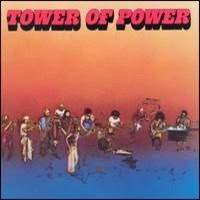 182) Tower of Power, So Very Hard to Go: A horn section that was pretty much the best in the business and frequently bursts into the orchestral like a horny supernova. Underneath, a rhythm section that could've anchored the Titanic while swindling out the funk proper. So Very Hard to Go is an Otis Redding scaled ballad with an epic arrangement to match: strings, horns, voices, and melody to push all into the classic with a singer up to the task. There's no zirconium in this bag; this is all finely polished jewel.

183) Etta James, Something's Got a Hold on Me, Trust in Me: She's the singer Janis Joplin listened to, a voice raw and frayed in the right places. A voice raw enough to power through shouters and smooth enough to massage ballads into wedding staples (e.g. At Last): A bluesy singer who could slam dance and soft shoe with equal skill. Perhaps James never got her proper due for never having scored the big pop hit (though she does own I'd Rather Go Blind), nor was she as technical as some others (say, like Joplin or Franklin). More refined, she didn't overuse the histrionics either. Nobody could shred a scream like Joplin and by comparison James might even sound demure but don't mistake that for subdued. James was strapped with a chrome-plated raspy shout that could easily throw some knives when needed. And unlike Joplin, hers was a voice that demanded intimacy—not one to be lost in the cavernous arena: scaled down but still a killer.
 184) Elton John, Tumbleweed Connection: There's a kind of desolate loneliness that permeates this album that makes Tumbleweed such a unique moment in John's and Taupin's careers. The kind of moment they'd never attempt to scratch at again. The characters drawn here are as sepia-toned as the album cover and its restless heart offers the kind of depth and authenticity that wasn't usually their gig. Even John's voice has warmth that would never be heard again. For both, their great commercial successes were still ahead of them (John would become the highest paid recording artist in history) and when it arrived these kinds of scaled-down gems would be forever lost. Taupin's lyrics here use the Amercian South as a metaphor for a shifting world that may've been a mirror to their own rising fame. As John's life became more diamond encrusted, so did his schtick. This is the Elton John album for people who don't like Elton John––raw and unvarnished. For me, it's easily the best work of both of their careers.
 185) Eddie Heywood, Soft Summer Breeze: This is the kind of musical tryptophan your parents would've thrown on to give their dinner parties ambience. That is, if your parents were really old like mine. Heywood may be best known for backing Coleman Hawkins and Billy Holiday and as the composer of the catchy '50s confection Canadian Sunset. Soft Summer Breeze was hit in 1956 when your Swing Era parents were listening to radios as big as Buicks. Heywood was an able pianist as his earlier gigs would indicate, but left to his own he tended towards the lightweight and other catchy sentimental ooze. Breeze was all of that but still manages to hone right into to the squishier part of your brain's music receptors, like hummingbirds to a feeder. You may think it's piffle but I'd argue that all the notes are exactly the right ones. I lament the long gone era of the well tuned instrumental. All we can do now is dig the crates to seek the musty nuggets like this one.

 187) The Quick, Hi Lo, Pretty Please: A criminally overlooked band to come out of Los Angeles's New Wave before there was one. Being very much of its time (1976) their sound had the vestiges of glam stuck all over it like pieces of toilet paper after an abusive shave. (Check their not quite post-Ziggy Stardust hair.) Quite likely the only band to integrate early Sparks as well as Ziggy so thoroughly and to such a great effect—well written songs with scope and lots of dynamics. They threw in some corny covers (Rag Doll, It Won't Be Long, Somewhere Over the Rainbow), and at times their sound pandered a mite too desperately to get on the radio, but all these many years later it still holds up. Two or three albums in and they might've been contenders had they gotten the chance.

Subscribe to:
Posts (Atom)