94) T. Rex, The Slider: Originally a part of a duo called Tyrannosaurus Rex, Marc Bolan was discovered sitting barefoot on a club stage by legendary producer Tony Visconti. The folky duo played on instruments found in dumpsters. T. Rex's sound was imbued with a quintessentially British skew, something that always appealed to my inner anglophile. Marc Bolan's voice had the quality of being both boyishly innocent and strangely otherworldly while also remaining completely unpretentious in a kind of pretentious way. This quality also explained his pseudo-psychedelic lyrics (I could never understand the wind at all/was like a ball of luh-uh-ove). Tony Visconti's production constructed a monstrous sound––layers of compressed fuzz toned guitar, strings, Flo and Eddie's superb background vocals, with a vibe and tempo that whispered of too-many-tokes and crisps. If this was the British 70s version of bubblegum pop, then the Brits were spoiled. For me, The Slider is a miniature symphonic masterpiece.
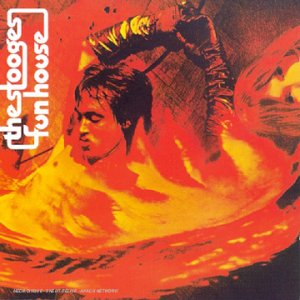
95) The Stooges, Down on the Street, Dirt: If you, like me, were a kid reading Creem magazine back in the day (it's long gone now), you were informed of its constant hagiographic praise of the Stooges. Had you heard the first album you might've also been left a little baffled. It had moments, to be sure, but there was still a long way to go. With Funhouse that hagiography was justified. This record is a sonic Michaelangelo mud pie. The guitar is crude and right on the mark, the lyrics were imaginistic and inchoate in that middle-school-dropout-savant kind of way, and no band of the punk era had a rhythm section even worthy of wiping this one's hessian bottom. If you've ever seen Iggy live then you know that he operates almost entirely on ecstatic impulse, a quality that could describe the band's compositional style too: An amazing album of dirty and dumb magic.
Once, there was talk of a post-Morrison Doors with an Iggy replacement – a flippin' genius idea, but alas. Here's a sprinkling of some fake Manzarek keyboards on top to give a hint of what might've been.
And a cover version that's pretty good too:
And Dirt, another masterpiece of the defiant low self-esteem category:
96) The O'Jays, For the Love of Money: It'd be easy to let Donald Trump throw piss all over this, a song about the evils of money lust that The Donald would hold up as a business model, but don't do it. If for no other reason because it has the funkiest, rocked up plectrum bass line you'll ever hear and a breadth of production genius that's wider than the lapels of the group's pimp-style suits. And their voices were some of the best rasps in the business: Much too good for even Trump to abuse away the charm.
97) Thelonious Monk, Rhythm-A-Ning: Probably the most apt song title ever bestowed. Monk's chords are like little tonal explosions that might happen if you were hitting the keys with a cluster of chopsticks. And nobody perforated a rhythm with a funky hundred little tonal bullet holes like Monk. His playing is the quintessential demonstration of the innovative possibilities when the sophisticated collides with the crudely simple and all the while respecting the succinct in a way jazz rarely does. He may be banging the grand instrument of the salon but it still sounds like he's dancing in front of the bonfire. You most definitely don't have to be a jazzer to dig what this cat was blowing.
98) Ennio Morricone, The Good, The Bad, and The Ugly and others: It's impossible to imagine Sergio Leone without this tweaked Italian voice rising in the background. A voice that could sing beautifully––like Cinema Paradiso––or absurdly––like The Good, The Bad, and The Ugly––and kill both with equal skill. It's his more absurd work that made him the darling of the cool avant garde. But at the bottom of it all was that sound, a stridently tuneful siren tainted with our own nightmares and always immediately recognizable of its creator. See also The Sicilian andThe Man with the Harmonica.
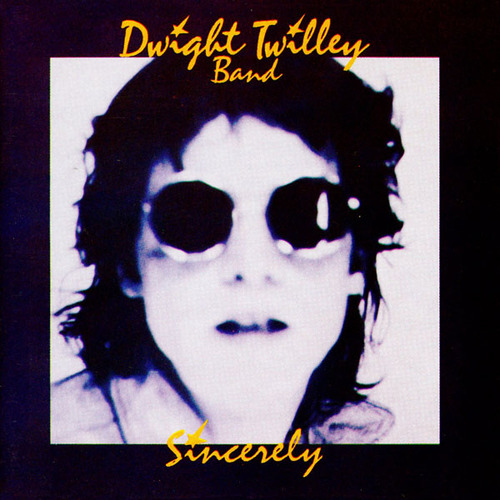
99) Dwight Twilley Band, Sincerely album: Rock, as much as any form of music, at its most successful is a kind of alchemy; a few basic chords––some version of I-IV-V, generally––and finding a melody within that straw that only a few true wizards can spin into gold. Melody being that elusive element that true Olympians can use to tase us directly into our auditory cortices. Dwight Twilley was one of those Olympians. Over the expanse of his long career he's written many an earworm worthy tune but the initial two proper Dwight Twilley Band albums, those with Phil Seymour and brilliant guitarist Billy Pitcock IV, were the stuff of the purest gold. Twilley and Seymour's voices together were honey with a bite and Pitcock's guitar always found some invention in the spaces of the songs he inhabited. Their power pop may've weighted a little too heavily on the nostalgia for the kind of massive appeal they deserved, but even all these years later this ca. 1975 album hasn't withered an iota. The truest wizardry is always ageless.
I'm on Fire was a radio hit that should've ignited a string of 'em but unfortunately the disasterous business practices of the record company seemed to sabotage them at evey opportunity. Below, the brilliant title tune from the album below: Dig the backwards Beatlesesque guitar.
100) Benny Goodman, Sing Sing Sing (with a Swing): This is rock and roll about 20 years too soon, a 1937 recording of the Louis Prima tune played by a Goodman's star-studded band that included a 17 year old Gene Krupa on the tribal drums. It may also be the era's 12 inch version as this one clocks in at near Free Bird length of over eight minutes which apparently was something not typical of the time. Here, the length only gives more time for the dynamics to build. The quality of the recording may sound a little bronze age-ish but this is swing turned up to 11.
101) Jimi Hendrix, Loose Ends: Hendrix has probably been the victim of more vault rape that any other artist in the history of recorded exploitation. Fortunately, there doesn't seem to have been much junk left behind in his unfinished canon as his posthumous releases have been mostly good. This record is especially notable because of the sort of behind the scenes snapshots it reveals of the dude himself. Hear him goof on Heartbreak Hotel and then give drummer Buddy Miles some ill-fated instructions that are contradictory at best. And nobody did throwaway jams for the ages like Hendrix. If there is a heaven, they would've pitched their lyre harps and heraldic trumpets for a Strat and Marshall stack when Hendrix arrived. And if there's no Hendrix in heaven, I won't go.
102) Phil Manzanera,Miss Shapiro: An Eno/Manzanera collaboration from 1975 that sounds like both and neither which I suppose is what a good collaboration should sound like. A great opening guitar riff by Manzanera and quintessential Eno lyrics (Dalai llama lama puss puss/Stella marls missa nobis/Miss a dinner Miss Shapiro/Shampoos pot-pot pinkies pampered/Movement hampered like at christmas/Ha-ha isn't life a circus) buffed up with some sprinklings of prog shellac and a thick miasma of a future New Wave yet to come. It's also curious to see how much more interesting a guitar player Manzanera was when he wasn't punching the clock for Bryan Ferry. A long neglected gem, this one is.
103) X, Los Angeles: The harmonies here can be jaggy and askew up––off by a mile and yet just where they ought to be. Billy Zoom's guitar is a smiling travel-sized version of Link Wray and at the time I wasn't entirely convinced his old school playing was the answer for X, but to me now it sounds perfectly appropriate. It provides a nice foil to John Doe's three chord seizures, Exene's feline wail, The Doors references, and a lyrical anger that was far more sophisticated than your typical punk era band. Also, X takes the traditional country duet, straps on some harder chords while jacking the tempos up and in the process brings it to a new, hipper urban space. One of the best band's of the punk era.
It's been argued that flash mobs are played out. They're passé and overdone to the point of irrelevancy. This point of view suggests that nothing is legitimate once it trends: Bull pucky. The Ode to Joy segment of Beethoven's 9th is such an essentially simple yet ultimately beautiful, poignant, and uplifting piece of music, to see it played on the street for the commons and not in some elitist salon or concert hall makes it all the better. The fact that Ludwig could only imagine this music and never had the ability to hear it in the atmosphere only makes it a more of a dewy-eyed experience.
Sure, maybe the whole idea "Best Coin Ever Spent" is quaint and corny, but this is corn of the highest quality, popped and candy-coated. It also suggests that maybe with a whole lot more corniness the world could be a much better place.
Rock and roll was the canopy of our cultural voice. [It was] striving to be a universal language... To be an artist was to see what others could not. Patricia Lee "Patti" Smith
Years ago, Robert Fripp did a solo signing event for King Crimson in the record shop of his family village of Wimborne Minster, Dorset. Two lads from a fledgling band brought him their demo and were eager for suggestions on how to make it in the business. Fripp's advice: Have you considered moving to London? Nobody goes trawling through the village greens looking for new talent, he said. They're not coming for you; Go to them.
Patti Smith knew this. And if even in that moment when she boarded the train from South Jersey to New York City she wasn't sure what the question was, she knew that to be in the throbbing heart of the dirty city was the only answer. Her Catholic girl's version of the Siddharthrian tale of leaving home is as much at the heart of her National Book Award winningJust Kids as her relationship with Robert Mapplethorpe. Despite the difficulties and privations she would inevitably encounter, including sleeping on the streets, she never considered going back. This aspect of Just Kids makes for the much more interesting story.
Whether you have any interest in Patti Smith, her music, writings, etc. or not––or even Robert Mapplethorpe––it doesn't matter; anyone who's ever wanted to leave the stifling cozy of the 'burbs for the big dirty city will understand. If you need celebrity markers, she's got 'em: she drops marquee names like starvation pounds––Janis Joplin, Jimi Hendrix, Andy Warhol––and her own little black book of exes is equally impressive––Jim Carroll, Allen Lanier (Blue Öyster Cult), Sam Shephard. As both artist and muse her ability to be in the right place at the right time proves nearly preternatural. Though, as readers will learn, every door the universe pushes open for her was earned by extreme dedication. This is one of the book's two most important lessons; The other: To never make a Plan B.
Interestingly, for young travelers of today Smith advises not to bother with New York. The Disney-fied city is not the place it once was for artists. And speaking of Disney-fication, she's presently developing Just Kids as a screenplay. As for the book itself, the story begins somewhere after high school and ends as Smith's legitimate musical career begins when she's signed by Clive Davis. Beyond the celebrity names and its supplement to the lore of the 60s and New York City, it was at Mapplethorpe's urging that she write the story. Mapplethorpe, for his part, was mostly a rake. The fact that he stayed back at the apartment while she paid the rent is another retelling of the drummer's girlfriend tale. The fact that he could love her without all the messiness of sexual attraction is his only saving grace. That, and his apparent talent. Had he not been such an early casualty of the AIDS era, it's possible that Mapplethorpe's star may've burned brighter, certainly longer. Now, 30 years later, his work still holds its market value. In the visual language of his photographs, the bleeding testicle and the calla lily are aesthetically equivalent. Content-wise, his particular brand of celebrity portraiture, fascination with S and M and drag, and his tonally obsessed nudes may all be a little footnote heavy (a mix of Edward Weston, Diane Arbus, Andy Warhol, Rembrandt, Botticelli, Baroque era still lifes, and classical statuary). The trail he is most credited with blazing is in his treatment of sadomasochistic subject matter. He pulled it out of the aura of spectacle and approached it as clinically and affectionately as any Baroque painter's still life. Many critics, like The Guardian, have gushed over him. His flower pictures are certainly fetish beautiful and he definitely deserves full credit for elevating the image of Smith's unsmiling visage to the iconic.
Of the many pre-rock goddess jobs Smith held, perhaps most significant was her scribing for CREEM magazine. Many of CREEM's writers have since become legendary––Lester Bangs, Cameron Crowe––and others would come to define the form itself––Dave Marsh, Greil Marcus, Richard Meltzer, Lisa Robinson. Just about anybody who was anybody among the critic-arati appeared in its pages (even Smith bandmate Lenny Kaye). Anyone reading CREEM in the 70s would've seen gallons of unctuous ink spent on Smith. The release of Horses was practically heralded in its pages. Though, their zealotry may've had an element of the self-serving purpose of aggrandizing one of their own (other of its writers would join bands themselves, notably Richard Meltzer [VOM] and Lester Bangs [Birdland, The Delinquents] with far less promising results). What Smith did offer the world, and what the critics may've loved most about her, was not just her passion and commitment for her own work but her healthy respect for the tradition of rock and roll they were writing about.
As an artist, Smith borrowed heavily from this tradition as the basis for her own music. In the book she explains how she sees rock standards as the lingua franca of our time. As side one of Horsesbegins with the stunning opening line "Jesus died for somebody's sins but not mine" which she then alloys onto Van Morrison's much familiar Gloria chorusas if she were sourcing Shakespeare or the Bible. It was a trick Smith would employ often, revisiting songs like Hey Joe, Land of a Thousand Dances, Time Is on my Side, So You Want to Be a Rock and Roll Star, My Generation, and Smells Like Teen Spirit and treating them all like a foundation for the rebuilding of the rock temple while adding new lines of her own. Despite the hallowed praise from the press, some of her own heros were less sanguine: While Smith often spoke eloquently of the significance of The Rolling Stones, The Stones didn't repay the favor––Mick Jagger would famously say he didn't care much for her.
Patti Smith may've been our truest psychedelic professor, our deepest poetic rock and roll encyclopedia, and one of the best theorists from the inside we've ever had. Just Kids formally establishes Patti Smith as one of her generation's elder statespersons and an invaluable cultural resource. Fortunately for us, she survived to tell the tale.
For me art is the capacity to experience one's innocence. Craft is how you get to that point. Maturity in a musician would be the point at which one is innocent at will. At that point the relationship between the music and the musician is direct and reliable.
The relationship with the music is always mysterious. When it works you can never tell, you can never guarantee that it's going to work. You can only put yourself in a place where it's more likely to happen.
If you haven't seen the video of Billie Holiday singing this make sure you do, it's moving. (See it at the above link.) The way she snarls her lips at the right moments and absorbs some of the pain of the lynched into her face, it's something. Holiday fan Joni Mitchell said, "many of the so-called great singers love their notes more than their text..." Maybe, but Billie loved them both.
The song title may be a little too apt when considering this. In any event at 66, Ferry's voice, while completely transformed into something other than what it once was, sounds magnificent––ragged and restrained and cooler than ever.
In an interview Ferry gave in the years before his most recent marriage (and after his £10 million divorce, the most expensive in British history––#2 was Jagger's payout to Jerry Hall), while he was dating a 21 year old dancer from his stage act, he spoke of his good fortune of being in a business like music that allowed him access to people from various age groups. As it turned out, he preferred not to hang with other 60 year olds like himself.
83) Roxy Music, Remake Re-model: The first Roxy album was something special. Back then Ferry's croon contained some actual spit and wasn't the pomaded warble we'd later come to love. Eno and Andy Mackay added layers of uniquely fruitful tension––Eno with his Dada science fiction (his flourishes are particularly brilliant here) and Mackay with a touch of a-yob-goes-to-Cotton-Club lacquer (and no one, NO ONE, brought the oboe like Mackay)––after the first two LPs and Eno's departure things got smoother: more great records would follow but thicker polish replacing raggedier edges. And then smoother still for the 80s output. Still, every corner of their sound was uniquely theirs all the way down to the fabulous beats of Paul Thompson and their take on girly record covers. This is what sexy eccentricity should sound like.
84) Can, Mother Sky: A salty German sound experiment beginning in the late 60s that'd turn hipster namecheck by the 80s (don't hold it against them): Yoo Doo Right e.g. providing hipster cred to a number of alt bands wanting to prove the coolness of their record collections. I stumbled on Can as their record blared from one of those now long gone Sunset Boulevard elephantine record outlets. I was hooked immediately. Their cool-bordering-on-cold sound is like a breeze coming down the German Alps. Their improvised ditties drip with a healthy serving of psychedelic barbecue sauce and a hint of jazzy phrasing but not too much. It's a formula that other bands, like ELP, could clone into bloated run-throughs of self-indulgent bombast but Can manages with self-restraint. Mother Sky may be long but it earns every second of its length (probably owing to their German efficiency) and mayalso contain the epitome of cool psychedelic melody lines. Their lyrics sometimes read like movie dialogue in Chinese-English translations but that's OK, it only makes their brand more Dadaesque. My nine year-old daughter heard this playing in the car recently and remarked that it sounded like old time music––1970, actually, which for her may as well be the ice age. Yeah, well call me a neanderthal. I dig it.
Here's a "blistering" live version from German television in 1970.
85) The Geraldine Fibbers, Toybox: The Fibbers were described as a fusion of "American roots music and blues influenced punk" and "alt country," which is probably correct in some cases but not here. Nels Cline's guitar takes the wheel and strapped in for the ride is Carla Bozulich's hairy vocal rendering and a few well sculpted screams that together turn this glittering nugget into a rage of fearsome power. I love this song––love love love it––and the album Butch from whence it came is as classic as it was unnoticed. The jittery lyrics tell of a pubescent girl torn between the new obligations of a changing body and a daddy falling apart. (Listen to the whole album here and ask why didn't I know about this before?) And I can't say enough about the phaser-set-to-kill of Nels Cline's guitar. There could never be a Butch II. This was an unique moment in time, un-reenactable, kind of like that angry sex you had with your ex-girlfriend when you're really hating each other and yet somehow yields a tantric-length orgasm. Just be glad it happened once and move on.
86) Booker T. and the M.G.'s, Hang 'em High: The M.G.'s were always smooth, suave, succinct, not too spicy but always right to the point. They were the model of unpretentiousness. This song, though, is a little out of their usual range. The melody is more narrative and Booker T.'s organ is like a zen calliope running Wagner rolls. No one massages the Leslie speaker better. The melody is short but the band makes every refrain count. The Hammond has too often been the instrumental vector of musical misdeeds but I can promise you that Booker T. will make you love it again.
87) Earth, Wind and Fire, Mighty Mighty: My memories of this song begin the day my best friend and his two brothers jumped up from the floor when this came on the radio and proceeded to dance their fool asses off. (I didn't join in.) My friend and his brothers were black. I mention this only because I tried to imagine anyone else and their brothers jumping up to dance so ecstatically together and I couldn't. Even if they were preparing for an audition for the revival of Oh! Calcutta!, it still wouldn't happen. Cultural proclivities aside, it's easy to imagine how this song might inspire otherwise manly men to dance like fools: it's one nasty groove. Plus, Philip Bailey's voice goes into some mad whistle tones that could crack Mariah Carey's ovaries––I kid you not. In its pre-disco days, EWF's marriage of ecstatic funk lite and R&B juiced up with horn and rhythm sections tighter than Cee Lo's cummerbund was the sh*t. It didn't get anymore ecstatic than Mighty Mighty. I've seen its potency firsthand and it can shoot some serious dilly voodoo straight into your onion.
88) Billy Preston, Outa Space: Always loved the language of a cool instrumental and sadly the instrumental golden age is now way behind us. Only very rarely does one ever sneak into our pop music consciousness anymore (La Valse D'Amelie probably being the only recent example). Preston is arguably the grandmaster of the Clavinet and legend has it that Outa Space was an improv that he was calling out the changes to the band on the fly. One of those rare moments where the thumbnail is the masterpiece. For its full effect the Clavinet demanded a plucky kind of technique which gets a turbocharge with a wah-wah and it's a technique that Billy nails with a railroad spike. Still as fresh and space age as it ever was.
89) Eno, Taking Tiger Mountain (By Strategy): Eno may've been a forefather of electronica but his 70s output was comparatively organic and live. His process, utilitzing a philosophical trick bag he called Oblique Strategies, involved chance and random conceits to force creative solutions, something completely foreign in the age of Pro-Tools.For his greatest glories, Eno's electronics only added color and texture and maybe some vibe but were usually part of a larger collaboration. To wit: Third Uncle is gizmo free and the vibe is all real time and carbon space; Back in Judy's Jungle is also loaded with ingenious analog layers in a completely different way. The strategy paid dividends in his lyric writing too. The whole album is an explosion of subtle brilliance. Eno's output includes much greatness but it was never so concentrated as it was on Tiger Mountain.
90) The Lounge Lizards, Do the Wrong Thing; Big Heart, Stink (from the Get Shorty soundtrack): This is jazz played by cats who grew up with rock and roll, or more precisely No Wave, movie soundtracks, various avant garde scronk, and probably some Can and Beefheart. Fake jazz is what the maestro John Lurie called it which is close enough: more jazzy than jazz. Whatever it is, it's a downtown Dagwood sandwich chock full of strange meat of unknown provenance. Lurie's sax isn't technical but his astute ear always finds some little pocket of wonder that holds a few golden coins. A currency that carries through all his work, be it the Lizards or his soundtracks. If such magic requires an outsized personality––of which this article makes an exhaustive case (if it's to be believed, Lurie and his friends say don't), as does his quirky and short lived show Fishing with John––then Lurie has got it in spades.
The Lizards never got their due. That's a shame.
91) Santana, Everything's Coming Our Way: Hippy dippy latin uplift from 1971 with ladlefuls of conga grease and deep fried together in a batter of smooth organ and Santana's long-tone guitar. Here the band eschews the Tito Puente and goes for a kind of paisley Hendrix with the maestro singing (and, surprisingly, his falsetto kills). Sure, Santana's sound is so much a part of the furniture of industrial rock radio its practically archetypal, but archetypal like a burrito––you could eat it a thousand times and still want another one tomorrow. And this one is just so damn full of optimism––the musical equivalent of a couple of uncut lines.
92) Dizzy Gillespie, Night in Tunisia: Sure, it's like the "Stairway to Heaven" of jazz for popularity, written in 1942 in kind of pasteurized milky version of bebop with a little Afro-Cuban pepperiness––simple and safe but colorful jazzers might say, as if there's something wrong with that. Let the geeks quibble, this tune is so cool it's almost impossible to mess up, even through countless reworkings. No matter who does it, it seems to bring out the best in everyone. It's a democratizer and that's pretty cool if you ask me.
93) Artie Shaw and his orchestra, One Foot in the Groove: This is what rawked the bobby-soxers ca. 1939. My dad was a Shaw fanboy until his dying day, having dropped the needle on Shaw's records since the time they were 78s (about 60 years). As for this song, I'm a sucker for repeated phrases spread out over chord changes. It's an elemental vibrational buzz that probably goes back to our cave dwelling days––one dude carves eight holes in his flute while the other guy's mud god told him it was more righteous with one and, voilà, jazz was born.
The song also may also be the essential showcase on what was best about the big band era: Listen as each reiteration of the chorus gets a different color treatment along the way––trombones one time, saxes the next, some sexy low grooving followed next by some growling love-call brass. They could blow 100 choruses and change it up every time.
And then there's the cat of Shaw himself. He must've oozed some kind of cool because this guy who looked like an insurance salesman managed to marry two of the butteriest omega babes of the swing era, Lana Turner and Ava Gardner. (His bedpost was notched with "an array of America's best sexual trophies.") This eight-time married swinger could also be an abusive a**hole. (He allegedly drove Lana Turner to a nervous breakdown. Babes love their bastards, don't they?) And he treated his audience no better, famously calling them a "bunch of morons."And just to prove that old age could soften no edge on this rough diamond, he'd accuse clarinet colleague Benny Goodman of basically being retarded. Along the way this middle school dropout studied advanced mathematics, became the #4 ranked marksmen in the US, hung with the communists during the McCarthy years, wrote three novels (Terry Southern was a fan), fronted one of the first small combos with electric guitar, was said to be "one of the greatest musicians that has ever lived" by no less than Ray Charles, was one of the first to bring latin sounds north (Frenesi, Carioca), and just generally freebased on his own stubborn awesomeness. As a bandleader and player he's considered one of the best of the era––and most erratic which may explain why he abruptly stopped playing forever in 1954: He was an inveterate perfectionist, a self-described "difficult man," as much Axel Rose as da Vinci. His claimed reason for giving up music was because that after attaining mastery, what could he do but slide downhill? (Goodman for his part died with a clarinet in his mouth.)
Like so many who're abandoned by their fathers at an early age, Shaw would return the favor by walking out on his own kids and everything else he loved. Fortunately, he blew the clarinet long enough to bring my dad some happy.






.jpg)
.jpg)


